

Classic Motors News
Historic Vehicles – Drop MoT for all Historic Vehicles
Sir Greg Knight, who chairs the All Party Parliamentary Historic Vehicles Group, says he would like to see cars being spared both road tax and annual roadworthiness tests when they reach 40 years old.
There are 2 different date classes of historic vehicle. Those that are both tax and MoT exempt manufactured before 1960 and those that have to undergo a modern MoT but are nevertheless exempt from Vehicle Excise Duty and which were made 40 years ago, which is a rolling exemption. He sees no reason for this distinction and is urging the government to merge the two dates. All vehicles manufactured 40 years ago should be both exempt from Vehicle Excise Duty and MoT as part of the historic vehicle classification and that both dates should be a rolling exemption he says.
The government has already proposed exempting tax-exempt vehicles from roadworthiness tests – as it’s done with pre 1960 classics – when it implements the EU Roadworthiness Directive into UK Law in 2 years time.
The Classic aware campaign says it is still working to make sure classics are given safety inspections if the MoT system is replaced by a new roadworthiness test in 2018.
What is the EU Roadworthiness Directive. – It will abolish the current MoT and replace it with a new testing regime and must be implemented in the UK by May 2018, however it is up to the UK governement how it happens.
The FBHVC and the All Party Historic Vehicle Group want to ensure ‘no safe and roadworthy historic vehicle’ is banned from being used as a result, and have proposed a system where vehicles that reach tax-exempt status are also exempted from roadworthiness testing, similar to the arrangement for pre 1960 cars which was introduced 3 years ago.
Historic Vehicle Tax Exemption
All cars that were built before January 1st 1976 will be officially tax free from April this year and its all down the HMRC and its rolling cut off date for historic vehicle tax exemption.
Cars from 1975 will soon be eligible to join the tax free club making historically significant cars just that little bit cheaper to run.
So favourites such as the Mk11 Ford Escort and the Vauxhall Chevette both which celebrated there 40th anniversaries last year will be for the first time this year eligible for tax exemption.
Good news for anyone that has a classic car we say, anything that makes it cheaper to run all helps.
Vehicle Tax or SORN cannot be passed on when a vehicle changes hands
On our earlier blog posts we informed you about the new changes regarding the vehicle tax laws that came into force on 1st October 2014 yet it seems that some motorists still do not fully understand when they need to tax a vehicle.
The new ruling which came into force on 1st October 2014 was the removal of the paper tax disc. The DVLA stopped issuing the paper discs when you taxed your vehicle although they do still issue you with a reminder when your vehicle tax is due.

The mistake some motorists are still getting confused by is that the Vehicle Tax or SORN no longer transfers over to you when you purchase a vehicle.
Even if the vehicle still has road tax on it this no longer transfer to the new owner, you have to tax the vehicle afresh.
The message that the DVLA want to get out is ‘Vehicle Tax or SORN cannot be passed on when a vehicle changes hands’.
Please click on the link below that will take you direct to the DVLA webpage where you can read and view all the necesssary information.
Silver Plates for pre-75 vehicles
Non-reflective number plates are now permitted on classic cars built before 1st January 1975, as long as the vehicles have been registered with DVLA as Historic Vehicles. Since April this year (2015) vehicles manufactured before 1st January 1975 could display the older style number plates provided that they applied to DVLA Swansea and are recorded within the historic taxation class. Previously only vehicles built before 1st January 1973 could show these type of number plates.
A senior press officer within DVLA said that by law vehicles recorded as being in the historic taxation class can display the black and white or black and silver style plates, vehicles that were not in this historic taxation class by DVLA should only display registration plates in the current standard.
For many classic car clubs this ruling is very appealing and evocative to classic car enthusiasts to have these type of plates displayed on their vehicles.
Your Car – Seven things you are no longer allowed to do in your car.
The ban on smoking in cars with anyone under the age of 18 came into effect on 1st October 2015 but were you aware of the 7 other things that you were once allowed to do in cars but are now longer able to do them.
Letting your pet sit on the seats
Although it is a little known rule letting your pet travel in your car with you is prohibited by the Highway Code unless however the pet is restrained in someway. In the Highway code it says ‘when in a vehicle make sure dogs or other animals are suitably restrained so they cannot distract you whilst you are driving or injure you or themselves should you have to stop quickly. A seat belt harness pet cage/carrier or dog guard are ways of restraining animals in cars or allowing a dog to travel in the boot of a hatchback or estate car is also considered as a suitable method of restraint as long it does not distract the driver. Although the Highway Code cannot be used to prosecute you it can be used as evidence, in other words if you had an accident due to an unrestrained pet you could be found guilty of driving without due care and attention.
Using a mobile phone
Back in the day when mobile phones first came out you could text and dial numbers on hand held phones freely, but as of 2003 it became against the law to use one and since 2007 the standard penalty has been a £60 fine and three points on your licence.
Driving under the influence of Alcohol
The ban of driving under the influence of alcohol has been in force since 1966 when it was unveiled as part of the Road safety Bill and the breathalyser was introduced the following year to help police it.
Travelling without a seat belt
This law came into force in the UK in 1983 however there are a few exceptions when you are allowed to go without it which include when your reversing or supervising a learner driver who is or if you are driving a goods vehicle that is travelling no more than 50 metres between stops. You are also allowed to go without if you are a licensed taxi driver who is either plying for hire or carrying passengers and also if you are in a vehicle being used for police fire and rescue services.
Carrying a child under the age of 3 in a car without seat belts
Although some classic cars do not require seat belts, by law it is illegal to carry any child below the age of 3 in such cars. Children aged 3 and over are allowed, but only in rear car seats.
Eating,smoking,drinking or applying make-up
Although the above actions do not come under an explicit law prohibiting them they come under the rule of not being in proper control of a vehicle.
Using a rear-facing child seat in the front
Now that most vehicles are fitted with passenger airbags as standard it is now important to avoid using rear-facing child seats in the front passenger seat as doing so could cause serious injuries to the child if the airbag goes off. Unless the airbag in the passenger seat is deactivated it is against the law to use a rear-facing child seat in a front passenger seat.
Happy Motoring !!!
MOT Certificate – A brief history
The MOT test was first introduced in 1960 under the direction of the Minister of Transport, Ernest Marples under powers in the Road Traffic Act 1956. The test was originally a basic test including brakes, lights and steering check which was to be carried out after the vehicle was ten years old and every year thereafter. This became known as the “ten year test”, or alternatively the “Ministry of Transport Test”. The high failure rate resulted in the age that vehicles became due for testing being reduced to seven years on 31 December 1961. In 1962, the first commercial vehicle exam was created and a valid certificate was required in order to receive a tax disc, and in April 1967 the testable age for an MOT was reduced to three years. On 1 January 1983 the testable age for ambulances, taxis and vehicles with more than eight passenger seats, excluding the driver’s, was reduced to one year.
The list of items tested has been continually expanded over the years, including in 1968 – a tyre check; 1977 – checks of windscreen wipers and washers, direction indicators, brakelights, horns, exhaust system and condition of the body structure and chassis; 1991 – checks of the emissions test for petrol engine vehicles, together with checks on the anti-lock braking system, rear wheel bearings, rear wheel steering (where appropriate) and rear seat belts; 1992 – a stricter tyre tread depth requirement for most vehicles; 1994 – a check of emissions for diesel engine vehicles; 2005 – introduction of a computerised administration system for issuing non-secure test certificates. Also rolled out in 2005 was the creation of the ‘Automated Test Bay’ this differs from traditional testing by adding additional equipment to the bay to negate the use of an assistant during the test; 2012 – checks of secondary restraint systems, battery and wiring, ESC, speedometers and steering locks.
There are various test classes:
Class I — Motor bicycles (with or without side cars) up to 200cc
Class II — All motor bicycles (including Class I) (with or without side cars)
Class III — 3-wheeled vehicles not more than 450 kg unladen weight (excluding motor bicycles with side cars)
Class IV — Cars, including 3-wheeled vehicles more than 450 kg unladen weight, taxis, minibuses and ambulances up to 12 passenger seats, Goods Vehicles not exceeding 3,000 kg Design Gross Weight (DGW), motor caravans and dual purpose vehicles
Class V — Private passenger vehicles, ambulances, motor caravans and dual purpose vehicles with 13 or more passenger seats
Class VII — Goods vehicles over 3,000 kg up to and including 3,500 kg DGW. If a vehicle is presented with a manufacturer’s plate and a ‘Ministry plate’ the weights to be used are those on the ‘Ministry plate’
PSV test (Class VI) — Public service vehicles used for hire or reward with more than eight passenger seats (test conducted by DVSA/DVA staff their own stations, or at DVSA authorised testing facilities (ATF) or designated premises (DP)
HGV test — Goods vehicles over 3,500 kg GVW and trailers over 1,020 kg unladen weight or 3,500 kg GVW if fitted with overrun brakes (test conducted by DVSA/DVA staff their own stations, or at a DVSA authorised testing facility (ATF) or designated premises (DP)
Today the MOT test (or simply MOT) is an annual test of vehicle safety, roadworthiness aspects and exhaust emissions required in Great Britain for most vehicles over three years old used on any way defined as a road in the Road Traffic Act 1988; it does not apply only to highways (or in Scotland a relevant road) but includes other places available for public use, which are not highways. In Northern Ireland the equivalent requirement applies after four years. The requirement does not apply to vehicles used only on various small islands with no convenient connection “to a road in any part of Great Britain”.
MOT derives its name from the Ministry of Transport. The MOT test certificates are currently issued in Great Britain under DVSA (Driver and Vehicle Standards Agency). MOT Certificates in Northern Ireland are issued by the Driver and Vehicle Agency (DVA). The test and the pass certificate are often referred to simply as the “MOT”.
Smoking In Vehicles
Update on new law on smoking in cars and other vehicles with someone under 18.
From 1 October 2015 it will be illegal to smoke in a car (or other vehicles) with anyone under 18 present. The law is changing to protect children and young people from the dangers of secondhand smoke.
Both the driver and the smoker could be fined £50. The law applies to every driver in England and Wales, including those aged 17 and those with a provisional driving licence. The law does not apply if the driver is 17 years old and is on their own in the car.
Every time a child breathes in secondhand smoke, they breathe in thousands of chemicals. This puts them at risk of serious conditions including meningitis, cancer, bronchitis and pneumonia. It can also make asthma worse.
The law applies to any private vehicle that is enclosed wholly or partly by a roof. It still applies if people have the windows or sunroof open, have the air conditioning on, or if they sit in the open doorway of the vehicle. The law won’t apply to a convertible car with the roof completely down.
For more information click guidance on new rules about tobacco, e-cigarettes and smoking
DVLA Online Services you can use
As a member of the Motor Industry and also a prominent cherished number plate dealer we also like to keep our customers up to date with changes that happen within the Motor Industry.
I have listed below a range of services that you can do online which saves you time and is instant. These services are all provided by the DVLA Swansea.
Driving Licences
• Apply for your provisional driving licence.
• Change the address on your driving licence.
• Renew your driving licence.
• Renew your driving licence if you’re 70 or over.
• Replace a lost, stolen, damaged or destroyed driving licence.
• Change the photo on your driving licence.
• Exchange your paper driving licence for a photocard licence.
You can also view various driving licence information including:
• the address on your record
• the date your driving licence will run out
• the types of vehicle your driving licence allows you to drive
• any penalty points or disqualifications on your record.
The service is FREE, easy to use and is available 24 hours a day, 7 days a week.
If you need to prove the status of your licence and/or details of any endorsements to third parties
visit www.gov.uk/view-driving-licence and follow the ‘Share Your Licence’ instructions.
The ‘Share Your Licence’ service will be available spring 2015 and should be used by both paper and photocard licence holders.
Drivers applying online will see the fee for a provisional driving licence fall from £50 to £34 and online renewals after 10 years fall from £20 to £14. The fee for driver tachograph cards will fall
from £38 to £32. For first licence paper applications the fee will fall by £7 to £43 and paper applications for renewing licences after 10 years will fall by £3 to £17.
The reduction in driving licence fees is the first phase in the DVLA review of its fees. The second phase will involve a comprehensive review of the DVLA’s funding and will focus on the way
services are delivered to customers as we introduce further digital services.
DVLA introduced a new style photocard driving licence from February 2014.

Holders of valid driving licences will not need to replace their current driving licence. The old driving licence format is still valid and DVLA will update them gradually as they are renewed and
replaced.
What’s changed?
The new card has a refreshed design incorporating a host of improved security features to keep the driving licence secure. The latest security features will also help in the fight against fraud.
Vehicle Registration Document V5C
You’ll usually have to register a vehicle as soon as you’ve:
• bought it
• built it
• rebuilt or altered it
• imported it.
If you buy a brand new vehicle, the dealer will usually take care of all the necessary arrangements to register it to you.
You should have a vehicle registration certificate (known as the V5C) if you are the registered keeper of a vehicle. DVLA do not capture information about the owner. This will only apply to the person who takes responsibility for the vehicle and taxes it.
What is the V5C?
Since August 2010, all V5C’s DVLA have issued will have a new look. Most new V5Cs are now red but some older ones may not be – to check the V5C is the latest issued use the DVLA enquiry service.

The V5C is a certificate that is issued when a vehicle is registered with DVLA. DVLA send the V5C to the registered keeper, normally the person responsible for registering and taxing the vehicle. This may not be the owner of the vehicle. The information it shows includes: the vehicle registration number, the vehicle keeper’s name and address, other important information about the vehicle (make,model, VIN number and previous keeper’)
The V5C is not proof of ownership as DVLA records keepers and not owners. While the V5C does not prove ownership you shouldn’t buy a vehicle without one.
Buying a Used Vehicle
Buying a used vehicle is a serious business and while there is no guarantee that you won’t be a victim of vehicle crime, knowing your consumer rights will help. This service provides advice on
what to ask the seller, about the vehicle registration certificate (V5C) and the identity of the vehicle. Some things to consider:
• inspect the vehicle carefully
• check the validity of the V5C at www.gov.uk/get-vehicle-information-from-dvla
The ultimate message is:
If in doubt, trust your instincts. If it seems too good to be true, it probably is.
Don’t be pressured to buy – there’s always another vehicle.
Tax Disc Changes
From 1 October 2014 DVLA stopped issuing paper tax discs and you no longer have to display it on a vehicle windscreen. DVLA hold a digital record of taxed and untaxed vehicles and do not need you to have a paper disc as proof you have paid vehicle tax.
You will still need to get tax to drive or keep a vehicle on the road and DVLA will still send you a renewal reminder when your tax is due for renewal. This applies to all vehicle types including those that you do not have to pay tax for. When you buy a vehicle, the tax will no longer be transferred with the vehicle. You must tax it before you can use the vehicle on the road.
You can tax the vehicle using the New Keeper Supplement (V5C/2) part of the vehicle registration certificate (V5C) online or by phone – 24 hours a day, 7 days a week, if you do not have a V5C in your name. Alternatively, the option of licensing at the Post Office Ltd remains, for those who prefer to visit a Post Office® branch.
When you buy a vehicle from a dealer, the dealer will automatically tax it when you register your details with DVLA. If you sell a vehicle after 1 October and you have notified DVLA, they will automatically give a refund for any full calendar months left on the vehicle tax to the registered keeper.
DVLA’s online vehicle tax service allows customers to buy vehicle tax 24 hours a day, 7 days a week, online or by automated phone.
Around 3 weeks before your tax runs out, you should get a reminder (V11) from DVLA, unless you have a Direct Debit in place and do not notify DVLA of changes. Use this to tax your vehicle online or by automated phone. The service is quick, easy and saves a great deal of time and effort. Motor insurance policies are no longer checked when you tax your vehicle, saving you further time. You don’t have to buy vehicle tax if you don’t use or keep your vehicle on a public road (e.g. you keep it in a garage, on a drive or on private land). You must make a SORN (Statutory Off Road Notification) instead. A SORN will remain in force until DVLA is notified that a vehicle is taxed, sold, scrapped or exported.
Stay insured. Stay legal.
By law the registered keeper of a vehicle must keep it insured. If it is not insured then a Statutory Off Road Notification (SORN) must be made. If there is still tax on the vehicle when a SORN is
made, the registered keeper will automatically receive a refund of any full calendar months remaining.
DVLA compares its record with details of vehicles on the Motor Insurance Database to identify uninsured vehicles. If a vehicle does not have insurance or is being kept off road and
a SORN has not been made, the registered keeper could face:
• a £100 fixed penalty
• a court prosecution. If convicted, the offence carries a maximum penalty of £1000
• the vehicle being clamped and impounded by DVLA or seized by police.
Check if your vehicle is insured at www.askMID.com
It is an offence to keep a taxed vehicle without insurance – if you’re the registered keeper, you could get fined.
Motorists do not need to provide evidence of their motor insurance when they:
• tax online or by phone
• register and tax through a motor dealer
• tax at a Post Office® branch.
• register and tax through the post to DVLA
Motorists still need to ensure they have a valid insurance policy, but DVLA will not check this when you tax a vehicle.
Driving Licence Changes – Updated
Back in February I posted about the Abolition of the photocard driving licence counterpart.
Today I am updating you on this information to specific customer segments, notably hiring a vehicle and professional driving/driving for a living.
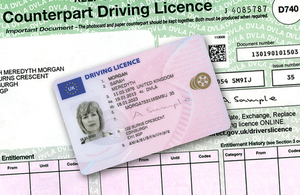
From 8 June 2015, the paper counterpart to the photocard driving licence will not be valid and will no longer be issued by DVLA. The counterpart was introduced to display driving licence details that could not be included on the photocard. These details include some vehicle categories you are entitled to drive and any endorsement/penalty points.
Please note, this does not affect photocard licences issued by DVA in Northern Ireland.
Customers with existing paper counterparts
If you already hold a paper counterpart, after 8 June 2015 it will no longer have any legal status. You should destroy your paper counterpart after this date but you still need to keep your current photocard driving licence.
If you have a paper driving licence which was issued before the photocard driving licence was introduced in 1998 these will remain valid so do not destroy them. Should you need to update any of your personal details or renew your licence, when you apply for this then you will only be issued with a photocard driving licence.
Penalty Points or what we call ‘Endorsements’ will no longer be shown on driving licences from June 8th 2015. This information will be held on the DVLA’s driver record. Should you need to check you can do this online or by post or telephone.
The DVLA has a free service that lets you see what details are on your driving licence and also includes what vehiciles you are allowed to drive and if you have any penalty points. To view the service click here: View Driving Licence service
After 8 June 2015 if you are hiring a vehicle or you drive for a living and you are asked to provide evidence of your driving record (entitlements and/or penalty points), you will be able to do this online for free by accessing the DVLA’s Share Driving Licence service. This service is currently in development but will be available before the counterpart is abolished in June and once we have details I will post on here. The service is for both paper and photocard driving licence holders and will also allow you to download a summary of your licence record which can be printed or shared.
Alternatively you can call DVLA and give permission for your driving record to be checked verbally by a nominated person/organisation.
If you are an organisation or business that rely on the counterpart to check the driving record of customers or employees then the free online Share Driving Licence service will be available before the counterpart is abolished.
Driving Licence Changes
From 8 June 2015, the photocard licence counterpart will not be valid and will no longer be issued by DVLA.

What does this mean for you?
Photocard driving licence holders
When DVLA stops issuing the counterpart, you should destroy yours but you still need to keep your current photocard driving licence. Entitlements and the status of your driving licence won’t change.
Paper driving licence holders (those issued before 1998)
These will remain valid, and should not be destroyed. The next time you need to update your name, address or renew your licence, you will be issued with a photocard only.
Penalty points (endorsements)
From 8 June 2015 penalty points (endorsements) will no longer be shown on driving licences. This information will be held on DVLA’s driver record, and can be checked online, by phone or post.
Organisations and businesses that check the driving licence counterpart
DVLA is developing new digital enquiry services for launch later this year that will allow organisations and businesses (such as employers and car hire companies) to view information they can currently see on the driving licence counterpart.
These new services will be offered in addition to the existing services, but are designed for those who have a business need for real-time access to the information, and may not wish to call DVLA or be in a position to use an intermediary.
Driving licence information via these services will only be made available to those who have a right to see it, and with the knowledge of the driving licence holder.
Why is the counterpart being abolished?
The driving licence counterpart was introduced in 1998 to display information that could not fit on the photocard driving licence. Predominantly, it gives information on penalty points and provisional vehicle entitlement. After 17 years of dutifully doing its job the counterpart will be abolished on 8 June 2015.
This means that from the 8 June 2015, DVLA will stop issuing the paper counterpart. Those in circulation after this date will no longer have any legal status and should be destroyed.
The reason for abolishing the counterpart is to reduce burden on motorists. For most drivers there simply isn’t a need to have this information on a piece of paper when it is now freely and easily available online. It also saves drivers from paying £20 to replace a lost or damaged counterpart. The decision to abolish the counterpart was as a result of the government’s Red Tape Challenge consultation on road transportation. It also aligns to DVLA’s Strategic Plan which includes commitment to simplifying our services.