

Motor Cars
Vehicle Tax Disc – Revenues Plummet
In the 6 months after the vehicle tax disc was scrapped the amount of vehicle tax collected in the UK fell by more than £200m figures have shown.
The paper tax disc that was first issued in 1921 was replaced in October 2014 by the online system in an overhaul that cost £1m and that critics warned would lead to confusion among motorists.
The latest figures obtained by the Financial Times in an Freedom of Information request, show that the DVLA Driver and Vehicle Licensing Agency saw an immediate drop in its revenue following the changes, The National Audit Office had claimed there would be no ‘material increase in lost revenue’ as a result.
Between October 2014 and March 2015 some £2.7bn was collected in Vehicle Excise Duty. This was £223m lower than the amount collected between October and March a year earlier. In contrast the £3.2bn collected between April and September 2014 was flat compared to a year earlier.
Figures from the DVLA for the 12 months to March 2016 are expected to be published after the UK’s EU referendum which took place on June 23rd 2016. This will give a full picture of the 12 months following the change, as well as an insight into the period from October 2015 – when motorists did not have the tax disc in their windscreens to remind them of the renewal date.
According to its latest report, the changes cost the DVLA £1m which was mostly spent on IT.
The DVLA uses a debt collection agency, Marston Holdings, to claw back lost payments. According to the company’s most recent accounts, pre-tax profits more than doubled from £5.8m to £13.6m in the 12 months to the end of May 2015. Revenue for the business which also counts the HMRC, Transport for London and local authorities among its clients rose from £58.5m to £84.4m through both acquisitions and organic growth. Income from distress warrant enforcement – when bailiffs are sent to a property – rose from £49.7m to £77.5m. The company did not show how much of its income comes from the DVLA and did not respond to calls or email for comment.
The DfT had estimated that £80m of vehicle tax revenue would be lost in 2015 – much higher than the £30m it had forecast for 2013. Its estimates are drawn from roadside analysis of untaxed vehicles and produced every 2 years. After a survey of 256 sites the department estimated in November 2015 that 1.5% of cars on the road were untaxed. This was s harp increase in the 0.6% figure for 2013, which it said was ‘probably due to major changes to the vehicle licensing system, which took place in October 2014’. As well as abolishing the physical tax disc, a requirement was brought in to tax vehicles when buying them, rather than rolling over to the previous owner’s vehicle tax.
Oliver Morley, DVLA chief executive, said “Almost 99% of all vehicles on the road are correctly taxed: that’s around £6bn in vehicle tax passed to the Treasury every year. We writ to every registered vehicle keeper in the UK to remind them when their tax is due and we have introduced a range of measures to make vehicle tax easy to pay, such as direct debit or online. At the same time we are taking action against those who are determined to break the law.
from the “Financial Times website June”
Personalised Number Plates – Popular than ever!
If its in the press then its got to be right hasn’t it. Personalised and cherished number plates are now more poplular than ever and even rank up there with ‘Fine Wine’ and ‘Rolex Watches’ as a way of investing your money.
The sale of Personalised and Cherished car number plates raised a record £102million for the Treasury and us Britain’s are turning into a nation of show offs and what better way than to invest in a cherished number plate.
Last year saw around 335,000 personalised and cherished number plates sold in the UK and the DVLA brought in £15million more in sales of cherished and personalised number plates compared with the previous year.
The most expensive cherished number plate sold to date in the UK was ’25 O’ which fetched £400,000
Don’t just take my word for it see these stories in the national press
Search our extensive database with millions of cherished, personalised and DVLA car number plates or call one of our experienced sales staff on 0116 235 0116 now and purchase your future investment.
No Exemption for Classic Cars entering London
Classic Car owners will have to pay a whopping £21.50 a day to drive into the centre of London from next year.
Sadiq Khan, the Mayor of London has announced the introduction of an additional £10 ‘T-charge’. The measure is being set up to reduce emissions, bringing the figure up to £21.50 which includes the original £11.50 congestion charge. From 2017, it will tax vehicles registered before 2005 and the levy will apply to all vehicles with pre-Euro IV emission standards and will operate in the same area as the congestion charge zone between 7.00am and 6.00pm Monday -Friday.
Speaking from FBHVC communications the Director Geoff Lancaster says ‘Policy Makers have not taken classic cars into account, it is nonsense!
A spokesperson for the Mayor of London Sadiq Khan said that there were no current proposals to exempt classic cars from the new ‘T-charge’ but were prepared to listen to feedback from the classic car industry.
Historic vehicles are already exempt from a separate low emissions area the ULEZ ( Ultra Low Emissions Zone) which is due to be extended form central London to cover the North and South Circular roads from 7th September 2020.
Mayor of London Sadiq Khan says with nearly 10,000 people dying early every year in London due to exposure to air pollution cleaning up London’s toxic air was now an issue of life and death.
Historic Vehicles – Drop MoT for all Historic Vehicles
Sir Greg Knight, who chairs the All Party Parliamentary Historic Vehicles Group, says he would like to see cars being spared both road tax and annual roadworthiness tests when they reach 40 years old.
There are 2 different date classes of historic vehicle. Those that are both tax and MoT exempt manufactured before 1960 and those that have to undergo a modern MoT but are nevertheless exempt from Vehicle Excise Duty and which were made 40 years ago, which is a rolling exemption. He sees no reason for this distinction and is urging the government to merge the two dates. All vehicles manufactured 40 years ago should be both exempt from Vehicle Excise Duty and MoT as part of the historic vehicle classification and that both dates should be a rolling exemption he says.
The government has already proposed exempting tax-exempt vehicles from roadworthiness tests – as it’s done with pre 1960 classics – when it implements the EU Roadworthiness Directive into UK Law in 2 years time.
The Classic aware campaign says it is still working to make sure classics are given safety inspections if the MoT system is replaced by a new roadworthiness test in 2018.
What is the EU Roadworthiness Directive. – It will abolish the current MoT and replace it with a new testing regime and must be implemented in the UK by May 2018, however it is up to the UK governement how it happens.
The FBHVC and the All Party Historic Vehicle Group want to ensure ‘no safe and roadworthy historic vehicle’ is banned from being used as a result, and have proposed a system where vehicles that reach tax-exempt status are also exempted from roadworthiness testing, similar to the arrangement for pre 1960 cars which was introduced 3 years ago.
Car Tax
The way car tax is calculated is changing and those affected will be anyone that purchases a brand new car after April 1st 2017. Vehicles that are registered prior to this date will not be affected and the tax rates will remain as they are.
If you decide to buy a brand new car after April 1st 2017 you will pay the first vehicle licence based on your vehicle’s CO2 emmissions and the majority of vehicles will move to the new standard rate of vehicle tax which is £140 a year, however if you buy a brand new car that is over £40,000 at first registration you will pay £450 a year after the first vehicle licence then after 5 years the vehicle tax will revert to the standard rate of £140 a year.
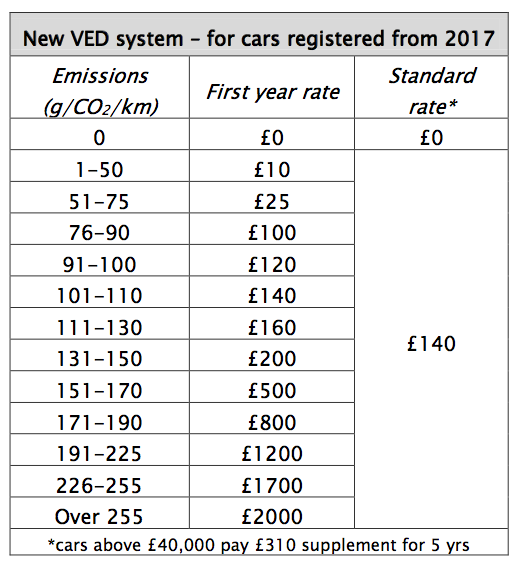
The DVLA have been working with the Motor Industry to ensure that the changes are introduced in a timely way and that the effect will be minimal on customers.
This is the first of many updates that the DVLA are introducing and I will keep you up to date on the progress.
Historic Vehicle Tax Exemption
All cars that were built before January 1st 1976 will be officially tax free from April this year and its all down the HMRC and its rolling cut off date for historic vehicle tax exemption.
Cars from 1975 will soon be eligible to join the tax free club making historically significant cars just that little bit cheaper to run.
So favourites such as the Mk11 Ford Escort and the Vauxhall Chevette both which celebrated there 40th anniversaries last year will be for the first time this year eligible for tax exemption.
Good news for anyone that has a classic car we say, anything that makes it cheaper to run all helps.
Christmas – Still time to get a Cherished Number Plate
With Christmas now just a week away there is still time to purchase your DVLA Personalised Number Plate or a Cherished Car Registration.
Most number plates we can now transfer for you online making the process much more effortless and swiftly or, if you prefer, we can supply your chosen car number plate on a Retention Certificate or Certificate of Entitlement most of which are now valid for up to 10 years. So what are you waiting for, it couldn’t be any easier. Browse through millions of cherished car number plates online or alternatively if you would rather speak to a member of staff just call 0116 235 0116.
Make that Christmas Gift a Personalised Number Plate – a memorable gift they can cherish for ever.
Motor Marks would like to wish all our customers old and new a very Merry Christmas and a Healthy and Prosperous 2016
New 16 series registration numbers available to purchase

From 3rd December 2015 for a limited time there is the availability to purchase the new’ 16′ series registration numbers. Remember that these registration numbers can only be transferred onto brand new vehicles from 1st March 2016 but can be supplied on a 10 year retention certificate.
If you have a particular ’16 ‘ series cherished registration number that you would like to see is available please contact one of our sales staff on 0116 235 0116 where we will be able to check availability for you.